Swimming with the largest fish in the world is an experience that transforms your perception of nature. However, for this dream not to turn into a logistical nightmare, it is vital to master two fundamental aspects: Whale Shark Watching: Season and logistics.
If you are in the discovery stage, looking for what to do in the Mexican Caribbean, or if you are already planning your trip and comparing transportation options, this article is your definitive roadmap. Here we break down the best time to go, how to get to the boarding ports, and why ground transportation is the key to a successful day.
The Caribbean Giant: Understanding the Official Season
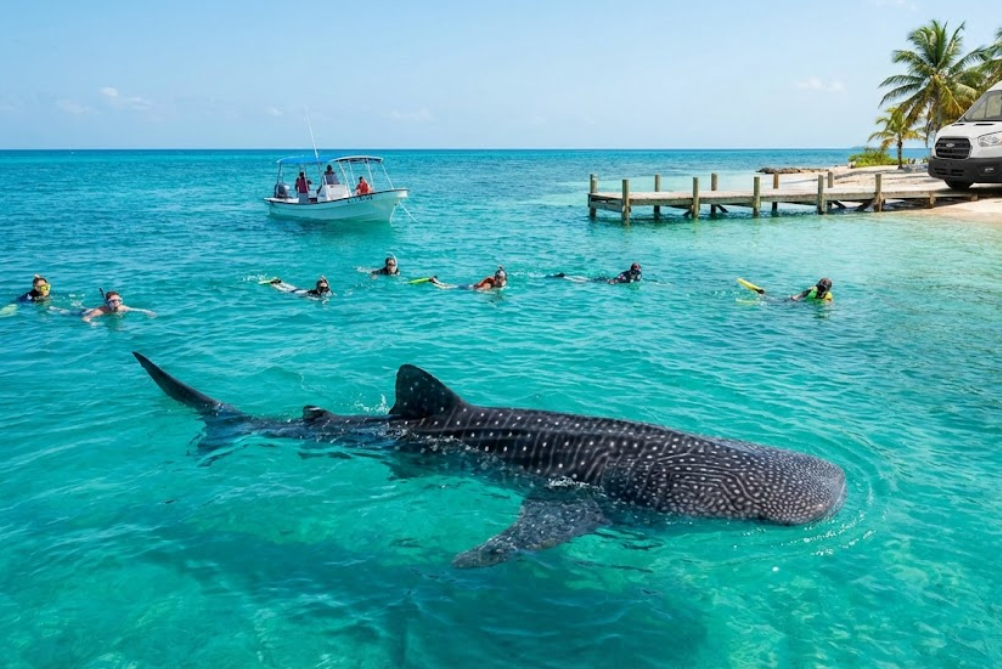
For marine life enthusiasts and travelers seeking authentic experiences, knowing when to go is just as important as knowing where. The whale shark (Rhincodon typus) visits the warm waters north of Isla Mujeres, Contoy, and Holbox to feed on plankton.
Although some operators may try to sell tours out of date, the official season regulated by Mexican authorities (SEMARNAT) is strict to protect the species.
Key Dates for Sighting
- Season Start: Mid-May.
- Peak Sightings: July and August (months with the highest probability of seeing massive congregations, known as “The Afueras”).
- End of Season: Mid-September.
If you travel during these dates, you are in the perfect window. However, the activity starts very early in the morning. This is where logistics play a crucial role. Most tours set sail between 7:00 AM and 8:00 AM from specific docks in Cancun (Punta Sam) or Chiquilá (for Holbox).
Important Fact: During peak months, it is common to see not only whale sharks but also giant manta rays and dolphins. The biodiversity in this area is incomparable.
Trip Logistics: The Challenge of Arriving at the Port on Time
Whale Shark Watching: Season and logistics is not just about getting on the boat. The real challenge for the smart traveler is how to get to the departure point efficiently, safely, and comfortably.
Imagine this: Your tour leaves at 7:30 AM from Punta Sam. If you are staying in the Riviera Maya, Tulum, or Playa del Carmen, you must leave your hotel at dawn. Public transport options at those hours are scarce, slow, and often require multiple transfers that jeopardize your arrival time. Missing the boat means losing the tour money.
This is where the service research stage comes in. Many tourists make the mistake of trusting last-minute taxis or shared shuttles that make stops at 10 hotels before reaching yours.
The Solution: Reliable Private Transportation
For a high-value activity like this, the expert recommendation is to secure a private transfer. When researching brands that offer punctuality and comfort, Caribbean Transfers stands out as the leading option in the region.
Guaranteeing your arrival with Caribbean Transfers eliminates uncertainty. A professional driver awaits you in your hotel lobby with an air-conditioned van, ready to take you directly to the dock without unnecessary stops. This is not just transportation; it is insurance for your tour investment.
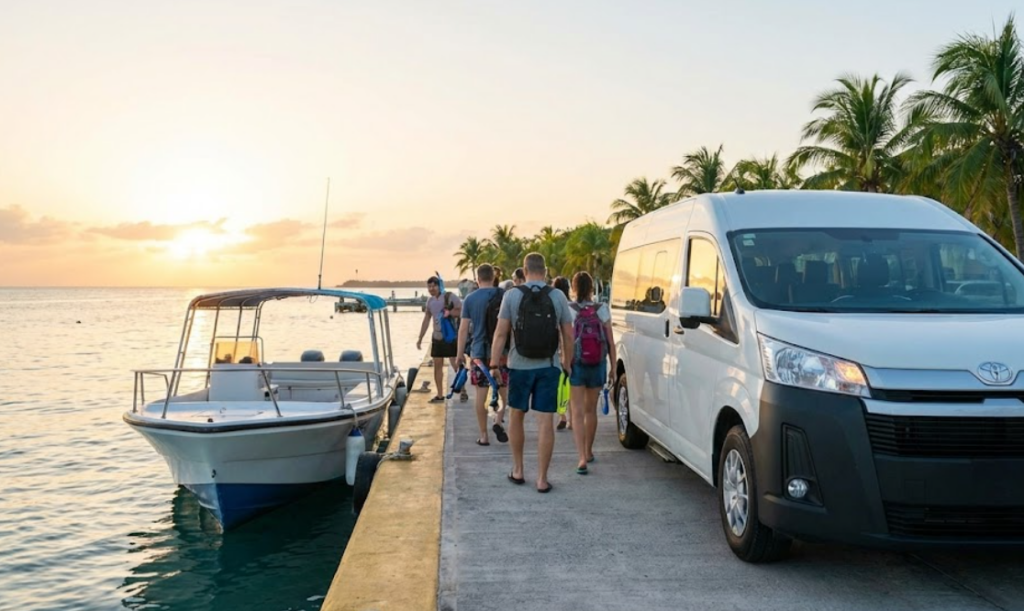
Why Choose Caribbean Transfers for Your Logistics
In the customer journey stage, when you compare options (ADO Bus vs. Taxi vs. Private Transport), it is vital to consider the “fatigue” factor. Swimming with the whale shark is physically demanding; you spend hours at sea, sometimes with waves, swimming against the current.
Upon returning to the dock, you will be exhausted. The last thing you will want is to wait for a bus under the sun or negotiate rates with local taxi drivers.
Competitive Advantages
- Military Punctuality: We know that boats don’t wait. We plan the route considering traffic so you arrive on time.
- Total Comfort: Modern, clean vehicles with powerful A/C to rest on the return trip.
- Transparent Rates: No surprises or hidden costs.
- Flexibility: If you decide to stay for lunch near the dock after the tour, the private service waits for you (prior coordination).
If you are ready to secure your transfer and forget about logistical stress, you can book your transportation directly here: Book Private Transportation with Caribbean Transfers.
Comparison of Transport Options for the Tour
To help you with your purchasing decision, we have created this comparative table thinking about the typical route from Riviera Maya to the tour departure dock (Puerto Juárez/Punta Sam).
| Feature | Public Transport (Colectivo/Bus) | Street Taxi | Caribbean Transfers (Private) |
| Punctuality | Variable (depends on fixed schedules) | Uncertain (subject to availability) | Guaranteed (pre-booked) |
| Comfort | Low (limited space, many stops) | Medium (car quality varies) | High (Executive Van, ample space) |
| Price | Economic | High (dynamic/tourist rates) | Fair (Fixed price per vehicle) |
| Stress | High (fear of arriving late) | Medium (price negotiation) | Null (Everything resolved before travel) |
| Ideal for | Backpackers without rush | Last-minute emergencies | Families, couples, and groups |
Preparations and Golden Rules for Sighting
Once the logistics are resolved with Caribbean Transfers, it is time to focus on the experience. Mexican authorities and international organizations like the WWF suggest strict practices to protect the animal.
Code of Conduct in the Water
- Do Not Touch: Touching the shark is strictly forbidden. The oils on our hands can damage their protective mucous layer.
- Distance: Keep a distance of 2 meters from the body and 5 meters from the tail (it can accidentally hit you).
- Photography: Do not use flash.
- Sunscreen: Only biodegradable sunscreens are allowed, or better yet, use UV protection shirts (rash guards) to avoid contaminating the water.
What to Bring in Your Backpack?
- Quick-drying towel.
- Hat and sunglasses.
- Motion sickness pills (take one 30 minutes before boarding, the sea can be choppy).
- Underwater camera (GoPro).
For more information on environmental regulations, you can consult external authority sites like PADI Travel or local government pages that regulate protected areas.
Frequently Asked Questions (FAQ)
These are the most common doubts we resolve to optimize your experience and search on Google.
Is it dangerous to swim with the whale shark?
No. The whale shark is a filter-feeding animal; it feeds on plankton and small fish. It has no interest in humans and is extremely docile. However, it is a large wild animal, so its space must be respected.
What is the best month to see them?
July and August are the months with the highest concentration of specimens, although the season runs from May to September.
Where does Caribbean Transfers pick you up?
We can pick you up at any hotel in Cancun, Playa del Carmen, Tulum, or the Riviera Maya and take you directly to your tour operator’s departure dock. Check our routes at https://caribbean-transfers.com/.
Is the tour suitable for children?
Yes, generally for children over 5 or 6 years old who feel comfortable in the water and with a life jacket. It is important to consider that the boat trip can last more than an hour to the sighting area.
Conclusion
Whale Shark Watching: Season and logistics are the two pillars of this trip. Nature provides the magic with the season, but you provide the logistical intelligence. Do not let poor transportation ruin the most memorable day of your vacation.
Plan ahead, respect the marine ecosystem, and secure your transfer with experts.
Ready for the adventure?
Don’t risk arriving late. Quote and secure your private transportation today with Caribbean Transfers and travel with the peace of mind you deserve.
👉 Go to Caribbean Transfers and Book Now
About the Author
Guillermo Ojeda
Expert Transportation Guide in Tourism and Logistics in the Mexican Caribbean.
With years of experience traveling the roads of Quintana Roo and Yucatan, Guillermo specializes in connecting travelers with the best local experiences, ensuring that logistics are invisible and enjoyment is the protagonist. His deep knowledge of routes, times, and services makes him an authoritative voice for planning your perfect vacation.
Connect with Guillermo and get more travel tips on his profile:
Guillermo Ojeda’s Facebook Profile